
Meniscus Lens
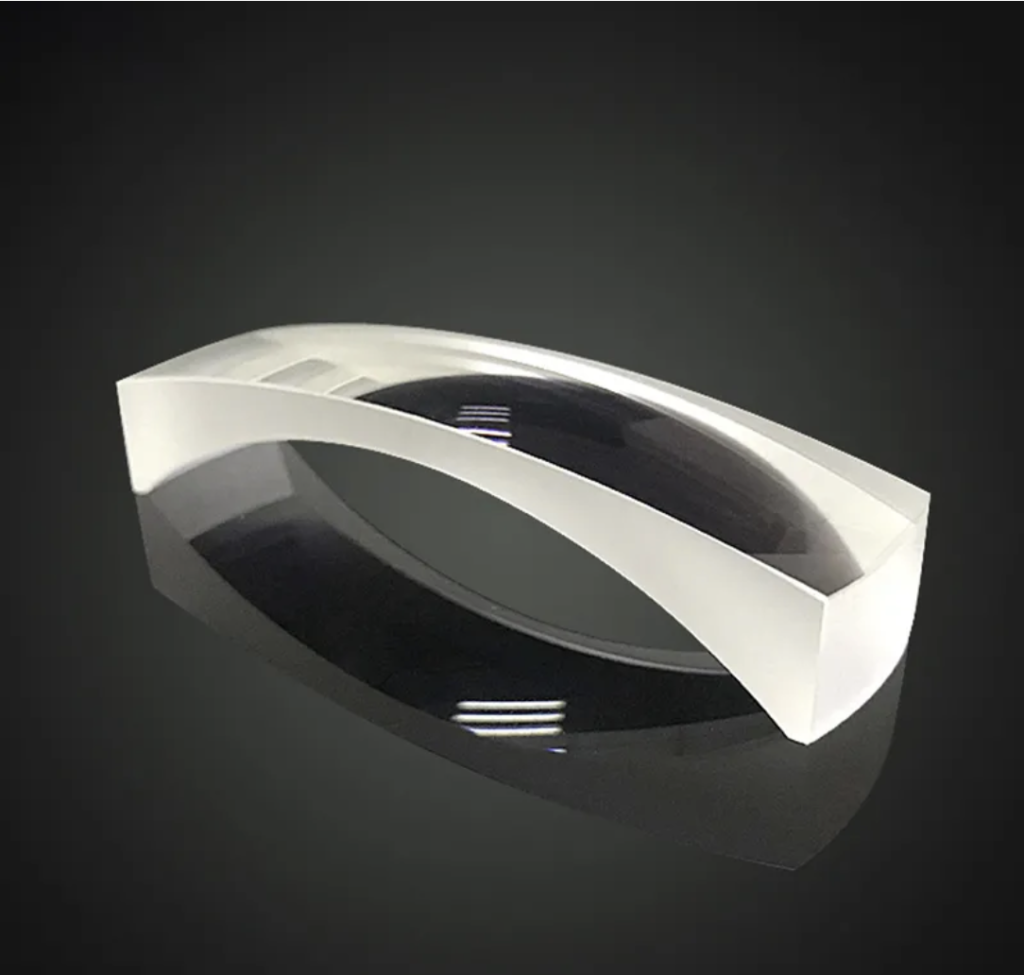
Meniscus Lens
Meniscus lenses have positive meniscus lenses and negative meniscus lenses, they are used in telescopes, camera, collimators, laser systems. Sunday offer coatings AR, Mgaf2 on broad wavelength.
Meniscus lenses are precision optical components designed with one convex and one concave surface to optimize light transmission and reduce optical aberrations. Compared with standard plano-convex lenses, meniscus lenses provide improved image quality, smaller focal spots, and better control of spherical aberration, making them ideal for high-performance optical systems.
Parameter
| Structure | Meniscus Lens |
| Material | Optical glass, UVFS, Germanium, Silicon, CaF2, MgF2, ZnSe ZnS, Sapphire |
| Diameters Available | 0.5mm to 600mm |
| Diameter Tolerance | +0.00/-0.01mm or customer design |
| Surface Quality | 10-5 |
| Surface Irregularity | λ/10 PV @632.8nm or customer design |
| Thickness tolerance | +0/-0.01mm |
| Clear Aperture | >90% of Diameter |
| Chamfer | 0.05-0.5mmx45degree, according to customer’s needs. |
| Centeration | < 10 arcsec |
| Coating | Single Mag2, Multiple Layers AR Coating A: 350-650nm B: 650-1050nm C: 1050-1585nm D: Customer Design |
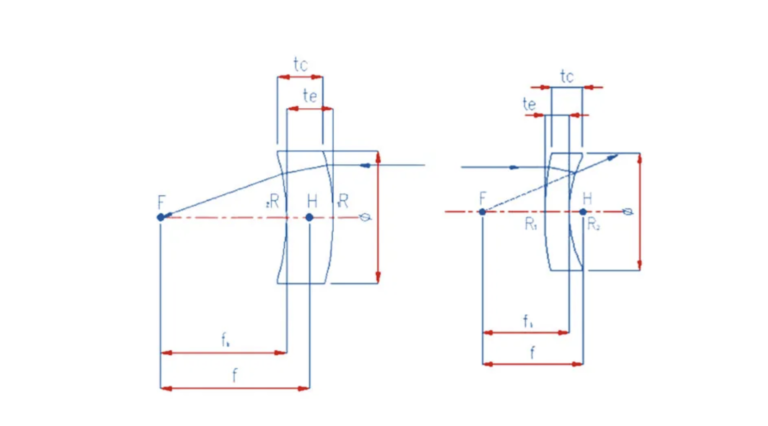
Applications of Meniscus Lenses
Meniscus lenses are widely used in various high-precision optical systems:
Laser Systems
Used for beam focusing, collimation, and shaping to improve energy density and beam quality.
Imaging & Camera Systems
Reduces aberrations and enhances image clarity in multi-lens optical assemblies.
Infrared & Thermal Imaging
Suitable for IR systems with high transmission and thermal stability.
Optical Communication
Efficiently couples light into fiber systems and improves signal transmission.
Medical Devices
Used in endoscopes and microscopes for high-resolution imaging.
VR / AR & Optical Instruments
Helps create clear virtual images and improves optical performance.
How to Use Meniscus Lens?
Light focused or dispersed.
The meniscus lens can focus or diverge light, thereby achieving control over light. When light passes through a meniscus lens, its shape and curvature cause refraction and scattering of the light, thus altering the direction and focal length of the light. This special design enables precise control and adjustment of light within optical systems, facilitating the processing and transmission of optical signals.
Optical imaging
In optical imaging, the meniscus lens can focus the light from an object onto a single point, forming a clear image. Due to its aspherical shape, the mensicus can reduce spherical aberration and astigmatism, thereby improving the clarity and quality of the image.
Optical lighting
In lighting scenarios, the meniscus lens can concentrate light onto a specific area, thereby enhancing the brightness and uniformity of the illumination.
Special optical instruments
The mensicus can be used in some special optical instruments, such as microscopes and telescopes. In these devices, the curved lens is employed to adjust the focusing and dispersion of light, in order to achieve better observation results.