
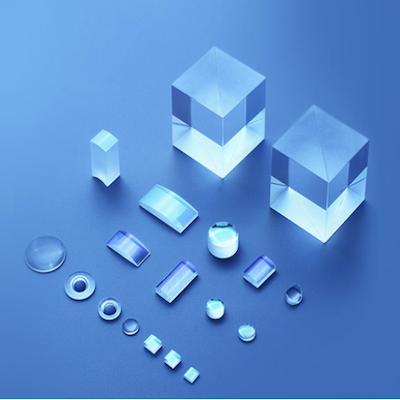

Reflection of light: Light is reflected back on a plane, and the incident angle and reflection angle are the same. Refraction of light: the phenomenon of deflection when light passes through media with different densities. A popular example of light reflection: in the sun, we use a mirror to let the sun shine on the mirror at a fixed incident angle, and the mirror will reflect the light of the sun at the same reflection angle. A popular example of light refraction: in a dark room, the water surface of a fish tank is illuminated with a flashlight at a certain angle (except 90 degrees). At this time, we will see from the side of the fish tank that the light beam is not a straight line, but a broken line.
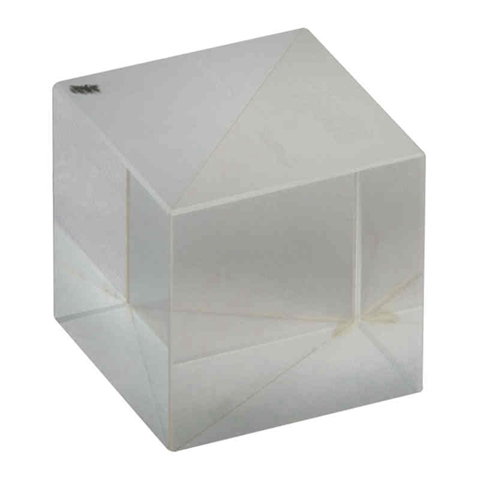
The reflection and refraction of light is an optical phenomenon that the propagation direction of light changes at the interface between two substances. There are some similarities and differences between them, which are briefly summarized as follows: Similarities between refraction and reflection:
1. The propagation direction changes. When light obliquely enters another substance, the propagation direction changes at the interface.
2. On the same side of the normal. Reflected light, refracted light and corresponding incident light are on both sides of the normal.
3. The three lines are coplanar. The reflected light and refracted light are all in the same plane as the corresponding incident light and normal.
4. The angle changes at the same time. Both the reflection angle and the refraction angle change with the corresponding incident angle, increasing or decreasing at the same time.
5. Both can be imaged. When light is reflected and refracted at the interface of two substances, both can be imaged.
6. The optical path is reversible. Both reflected and refracted optical paths are reversible.
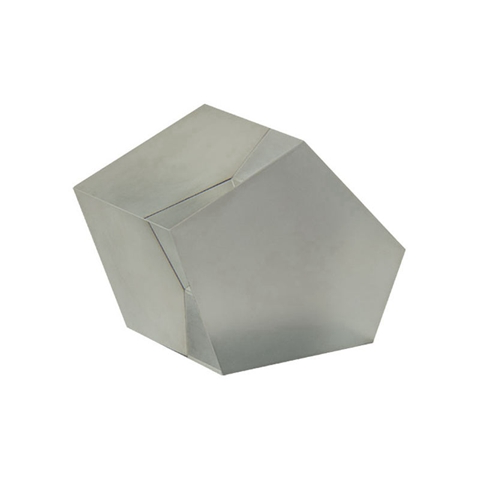
The difference between refraction and reflection:
1. The distribution at the interface is different. The reflected light and the incident light are on the same side of the interface, but the refracted light and the incident light are on both sides of the interface.
2. The angles are different. The reflection angle is equal to the incident angle, and the refraction angle and the incident angle are not (necessarily) equal (in a certain functional relationship).
3. The direction doesn’t necessarily change. When the light is perpendicularly incident on the interface between two substances, the direction of the reflected light changes, and the light is reflected back into the original substance. However, the refracted light enters the other substance with the same direction.
4. The distribution of object images is different. The object images are on both sides of the interface when reflected, and on the same side of the interface when refracted. 5. The image size is different. The image size is the same when reflected, but different when refracted.
6. When light is reflected, it does not necessarily refract, but it is reflected at the same time (generally).
7, the law is different:
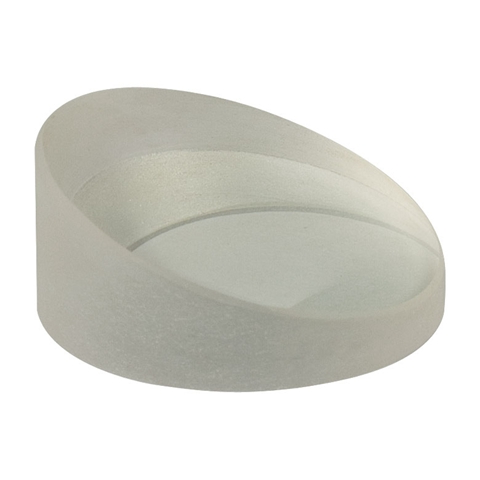
Law of refraction of light:
① Refracted light, the incident light and the normal are in the same plane, and the refracted light and the incident light are separated on both sides of the normal.
② The sine of incident angle is proportional to the sine of refraction angle, that is, sini/sinr= constant. In refraction, the optical path is reversible. Law of reflection of light: ① Reflected light, incident light and normal are in the same plane, and they are separated on both sides of normal.
② The reflection angle is equal to the incident angle. The law of reflection shows that for each incident ray, the reflected ray is unique, and the optical path is reversible in the reflection phenomenon.