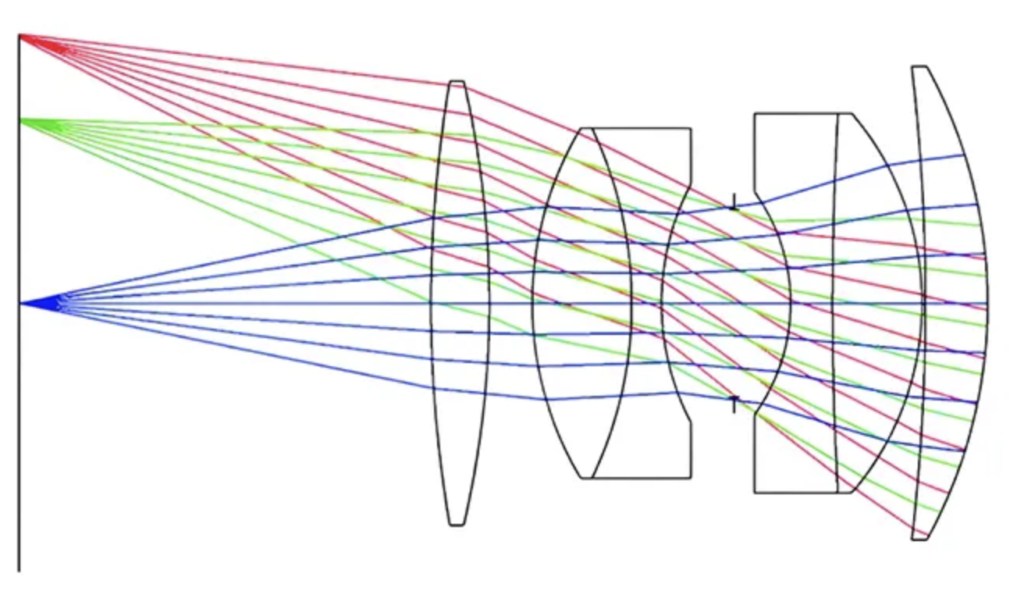
Achromatic Doublet Lens
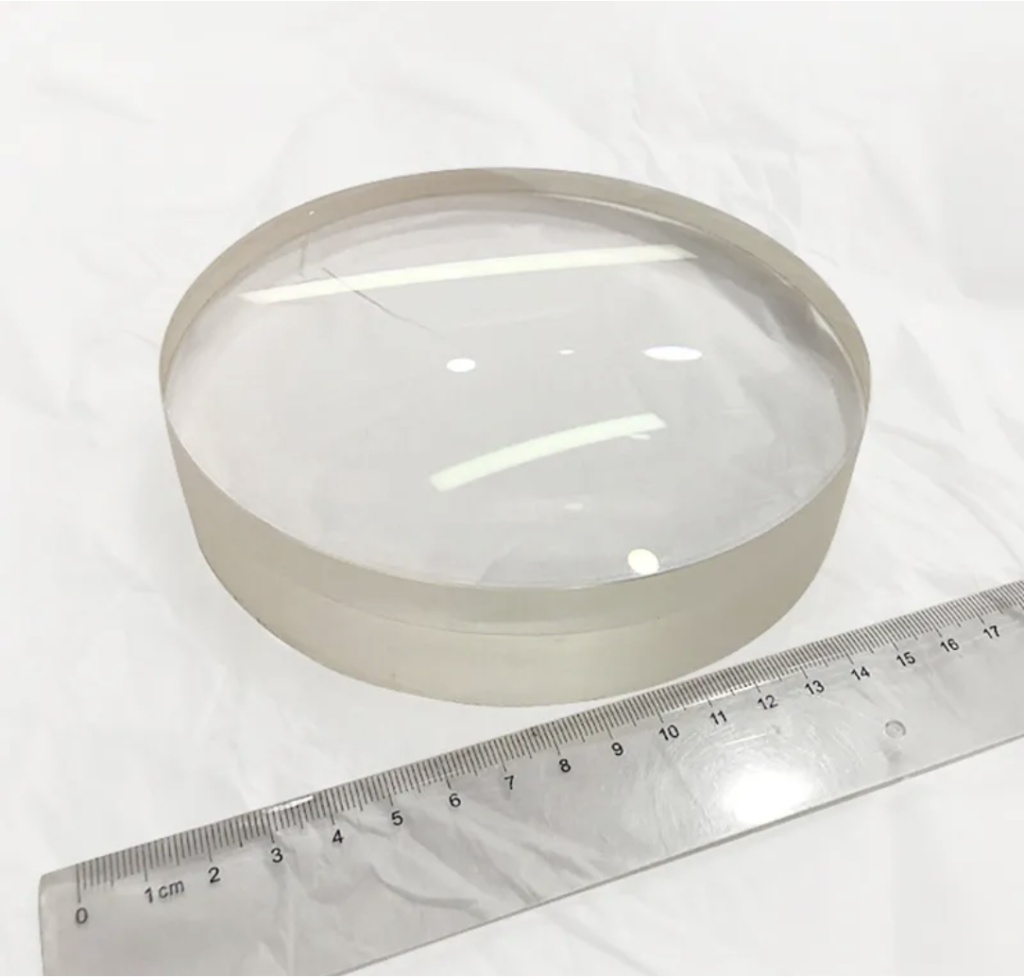
Achromatic Doublet Lens
Achromatic lenses are cemented with two lenses mainly used to reduced values of spherical aberration, coma and chromatic aberration. Sunday offer positive achromatic doublet lenses and negative achromatic lens with coatings. We can select glues of different refractive indices according to the customer’s requirements, and also provide low-stress bonding. The eccentricity of the adhesive bonding can be achieved within 2 seconds
As a leading Spherical Lenses Manufacturer, we deliver precision-engineered spherical lenses with rapid prototyping, rigorous quality inspection, and responsive global technical support — request a free sample and fast quote today.
Parameter
We have a large stock of cemented lenses, such as those with diameters of 12.7mm, 20mm, 25.4mm, and 50.8mm, and various focal lengths. Additionally, we offer customized cemented lenses for our customers. You can choose CDGM material or imported materials. We also provide services for designing cemented lenses. The following are the detailed parameters for customization.
Customized Cemented Lenses
▲Material:CDGM glass Schott glass OHARA Glss
▲Dia:0.5-600mm
▲Surface Quality:20-10
▲Flatness:1/20 lambda
▲RMS:1/100 LAMBDA
▲Roughness<1nm
▲Centeration<2 ARCSEC
▲Tolerance:+/-0.02mm
▲Coating:BBAR DIELECTRIC COATING
Coating:400-700nm,650-1000nm,1050-1700nm
Tolerance
Diameter:±0.01-±0.1mm
Center thickness:±0.01-±0.5mm
Focal length:±0.5%
Clear Aperture>95%
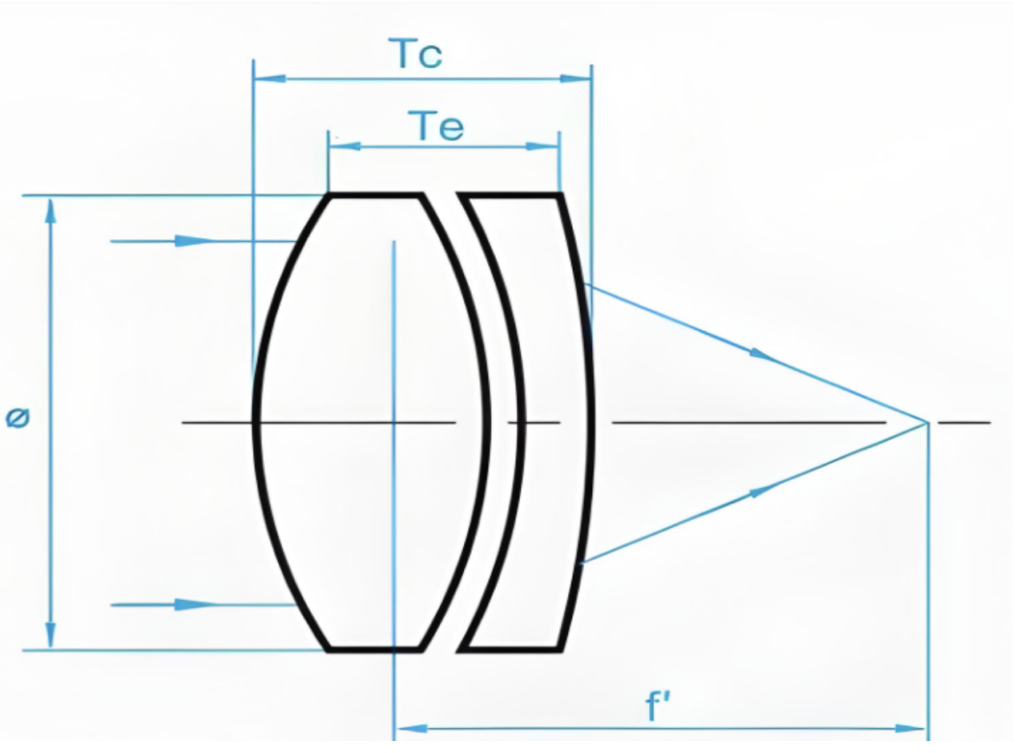
Case Study
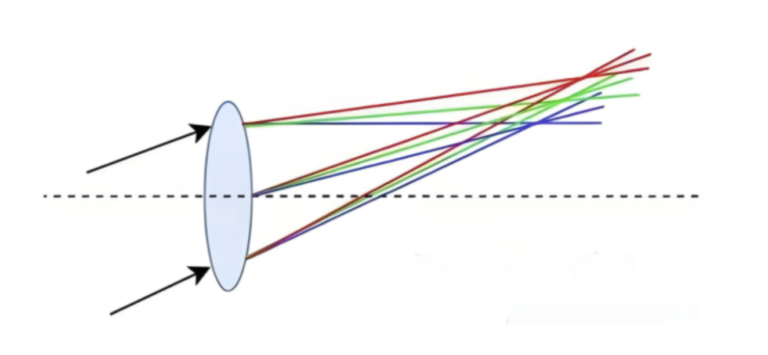
Axial and vertical color difference
Axial chromatic aberration arises from the difference in refractive index of the same material for different wavelengths of light, resulting in varying optical focal degrees.
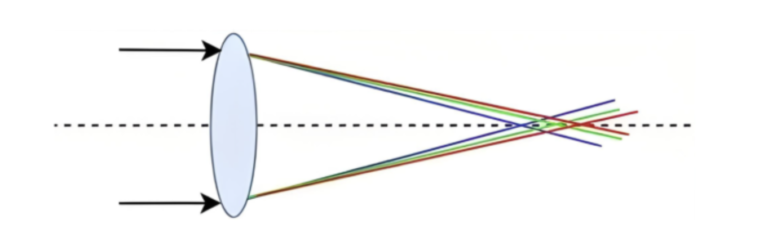
While lateral chromatic aberration is caused by the different magnification ratios of the same material for different wavelengths of light. In essence, all of this is due to the different refractive indices of the same material for different wavelengths of light.
The Application Of Achromatic Lens
Chromatic aberration correction
A doublet lens is composed of a positive lens (typically low-dispersion crown glass, such as BK7) and a negative lens (high-dispersion flint glass, such as F2) cemented together.By taking advantage of the difference in Abbe numbers of the two materials and through the rational distribution of optical power, the focus can be made to coincide at two specific wavelengths (such as the F line at 486.1 nm and the C line at 656.3 nm), effectively eliminating axial chromatic aberration.
Telescopes and Astronomical Observations
As an achromatic objective lens, it is widely used in refracting telescopes, focusing red, green, and blue light at the same point, significantly enhancing the sharpness of star points and the clarity of planetary outlines. It is a key component for advanced astronomy enthusiasts to improve image quality.
Microscopy and Endoscopy
In microscopes and medical endoscopes, achromatic doublet lenses can reduce edge purple fringing, enhance color fidelity and detail resolution, and meet the requirements of high-precision imaging.
Collimation and focusing in laser systems
It can efficiently convert point light sources into parallel light beams, suitable for collimating lasers with power above 1.5W, and is widely used in laser processing and measurement systems.
Camera lenses and photographic optics
As the basic unit of a lens group, it is used to suppress color fringing and improve edge image quality, and is commonly found in the design of mid-to-high-end photographic lenses.
Image relay and projection system
Supports image magnification ratio transformation from 1:1 to 4:1, suitable for image transmission systems in the visible light band, such as industrial inspection equipment and projectors.
Confocal 3D imaging
Due to its high lateral and axial resolution, it can be used as an ideal optical component for confocal imaging systems, improving the signal-to-noise ratio and contrast of three-dimensional imaging.