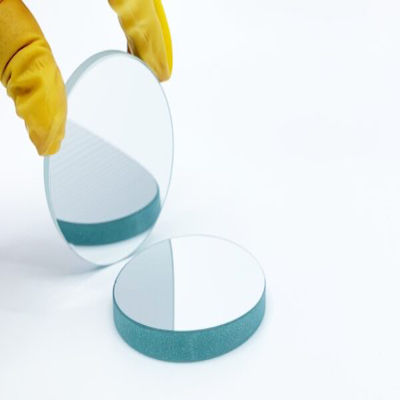
Optical mirrors are precision mirrors with highly polished flat surfaces or curved surfaces that reflect light. Ashley-Tech produces custom mirrors for various applications. Life science, astronomy, metrology and solar energy engineering are just a few industries that rely on our precision mirrors and other optical components.
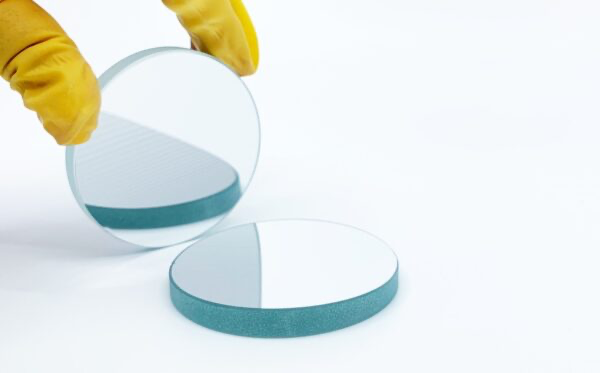
Ashley-Tech can make high-quality mirrors to reflect a specific wavelength range while allowing light of other wavelengths to pass through. Custom mirrors and precision mirrors can also be designed to reflect at a predetermined angle.
Ashley-Tech also produces high-performance ultra-wideband metal mirrors. Here, the substrate is first coated with a reflective metal film, and then coated with a dielectric overcoat. Yibeite’s metal coating includes aluminum, silver or gold. When working in infrared applications, especially when the wavelength is greater than 2μm, gold is an ideal choice. Silver has high reflectivity in the visible and near infrared range. For the visible light range of general use, the performance of aluminum coating is very good. The final dielectric coating can provide protection and enhance reflectivity, and these mirrors are very durable.
For certain applications with narrow wavelength and high energy level, we recommend using laser-grade mirrors. These high-efficiency precision mirrors can be used for beam steering in laser applications. The dielectric coating provided by Yibeite can be optimized for the laser wavelength you choose to achieve high reflectivity.
Other special mirrors
Ashley-Tech’s parabolic mirror aims to reflect energy outward from a single point, or capture all parallel incident rays and reflect them to a single focus. They have many applications, including laser material processing, fluorescence microscopy, high harmonic generation and waveguide-free supercontinuum generation.
The off-axis parabolic mirror can be regarded as a “cut-out” of the larger parent parabolic mirror. These mirrors are difficult to align, but they will be very helpful for optical design after being set correctly. They have many of the same functions as parabolic mirrors, but they deviate from off-axis light. This can leave more interactive space around the focus.