
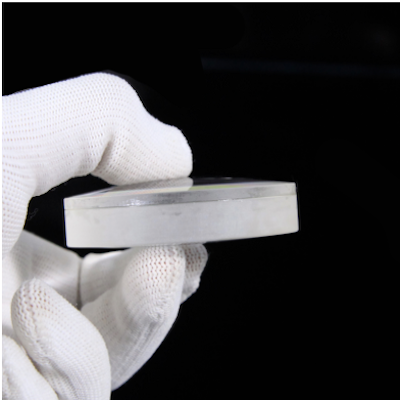
1. Improve the image quality of the optical system;
2. Reduce light energy loss and increase image clarity
3. Simplify the processing of optical parts
4. Protect the surface of the engraving
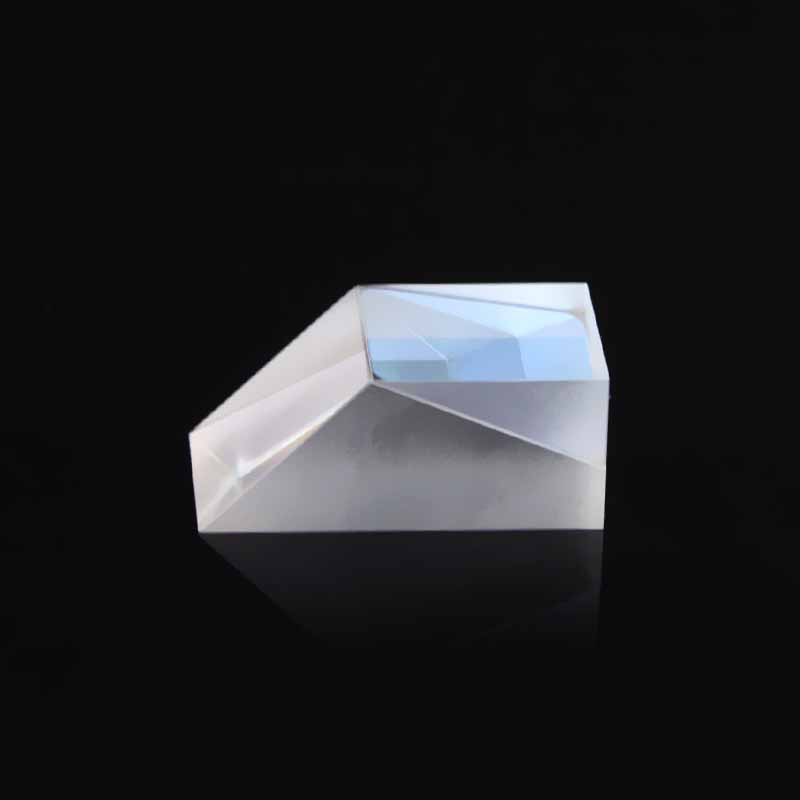
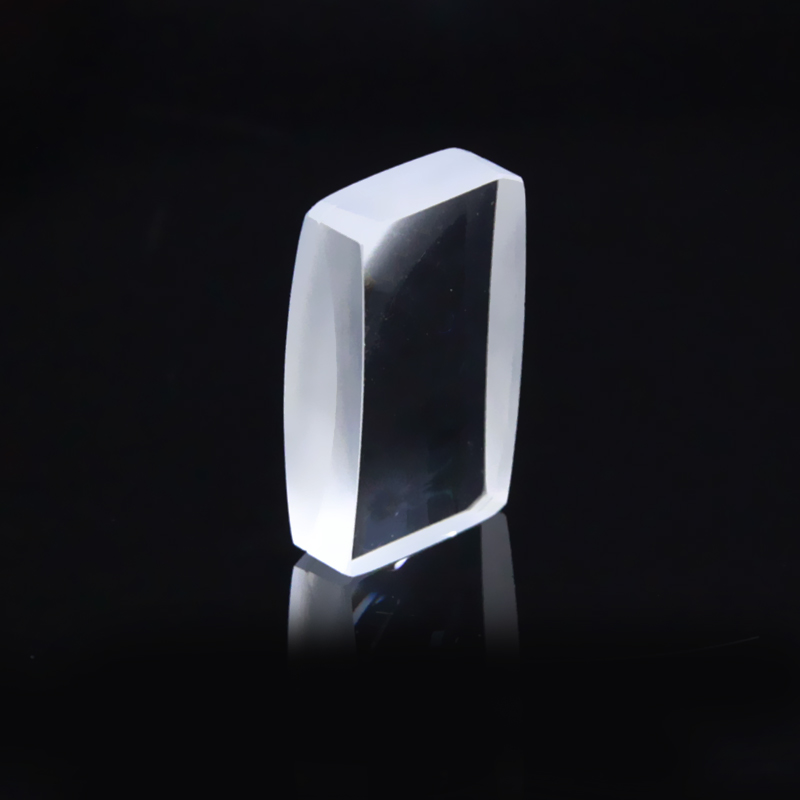
Technical requirements for glueing
First, ensure the center error or angle error. For the lens, ensure the center error of the lens. For prisms or plane mirrors, ensure the optical parallelism of the prism.
The second is to ensure that the bonding surface realizes the “zero defect disease” bonding, that is, to ensure that the polished surface of the bonding does not reduce the requirements for surface defects because of bonding, and at the same time does not affect the surface shape of the non-glue surface because of bonding.
I. Overview of optical bonding
Combination method of optical components
Mechanical method I Mechanical method is to combine several optical parts by mechanical parts (such as partitions, pressure rings, etc.) to form a complex optical component.
Glueing is to use optical-grade transparent glue to glue several optical parts into complex optical parts.
The optical glue method is to combine several optical parts into complex optical components by relying on the attraction of molecules between the polished surfaces of the parts.
The principle of glueing
Mechanical bonding, physical adsorption, electrostatic gravity, mutual diffusion, chemical bonding.
The main technical requirements of bonding
1) Ensure the center error of the bonded lens to ensure the parallel difference of the bonded prism;
2) Eliminate the bubbles in the bonding layer
3) The glue layer is firm;
4) Ensure the surface accuracy of the adhesive.
II. Lens bonding and centering
1) Focus on the transmission image
2) The center of the ball reflection image is fixed
3) Laser interference legal center
4) Automatic centering of glued lens
The focus of the transmission image is fixed at the center
The centering of the transmission image is determined by observing the deviation of the transmission image of the lens from the geometric axis. Glue the lens to the joint, and the end surface of the joint is strictly perpendicular to the spindle of the machine tool. When centering, rotate the lens and establish the center through the cross-drawn image transmitted by the lens. The biggest shortcoming of this method is that when the deviation of the focus of the transmission square to the reference axis is zero, and the optical axis and the reference axis have an intersection market, the actual eccentricity of the lens cannot be reflected.
The center of the ball reflection image sets the center
Bond the lens to the joint, and first find out the correction point of the lens. For the non-bonding surface, the correction point is its curvature center. The correction article of the bonding surface can be calculated by the near-axial spherical refraction formula. Then choose the appropriate objective lens according to the distance from the correction point to the non-adhesive surface of the lens. The distance between the objective lens and the non-bonding surface of the lens is not less than 10mm, which is convenient for operation. After determining the position of the ball center self-squasi-reflective centrizer in the edge grinder, observe the center of the curvature of the optical surface of the lens, and turn the joint until the center of the ball does not move or beat within the allowable range, that is, the centering is completed. This method has high centring accuracy and is mainly used for centrating lenses with small diameter and small radius of curvature.
Laser interference legal center
The laser centering method consists of three parts: a adjustable focus laser, a two-dimensional position sensor, electronic processing and display parts. The lens is clamped in two hollow fixtures, and the laser can pass through. The rotation of the lens can determine the center from the movement of the light point on the photosensitive piece. The laser centering instrument is widely used in mechanical centering edge grinding machines, which is suitable for lens centering with a centering angle of less than 16 degrees. This method is simple to operate, fast, and has high centring accuracy, which can reach 10 seconds of centring.
Automatic centering of glued lens
Place the convex or plane of the negative lens in the glueing on the workbench, and place the positive lens on the negative lens, relying on the self-weight of the parts to automatically coincide with the optical axis of the center of gravity of the lens.
III. Adhesive process
1. Adhesive materials
1) Requirements for the adhesive layer after bonding:
Optical properties, strength and cold resistance -40~-70C
Heat resistance 40~70C
2) Requirements for adhesive materials
Optical properties: mechanical properties close to optical materials: expansion coefficient, elastic modulus, small volume shrinkage during curing
Thermal properties: -70~70C Good thermal stability Chemical properties: stable and non-toxic
Others: simple preparation and easy to remove glue
2. Types of adhesive materials
Natural lipid optical glue:
Thermoplastic, light yellow glassy solid; non-crystallization, good optical consistency; has a certain bonding force, does not corrode glass; fast curing, easy to remove glue; stress can be eliminated
Disadvantages: Large expansion coefficient and small use temperature range.
Synthetic resin optical glue
Optical epoxy resin glue: small curing shrinkage; large adhesion; high mechanical strength; good resistance to high and low temperature; good chemical stability; the disadvantage is that the curing time is not easy to grasp; the glue is difficult to remove; the curing agent and diluent used are toxic. Methanol glue: good spectral transmittance, mechanical strength, cold resistance and heat resistance. The disadvantage is that the curing and shrinkage is large.
Photosensitive glue
Features: good transparency; high mechanical strength, and good flexibility and elasticity; small expansion coefficient; good resistance to high and low temperature; good chemical stability; fast curing, small shrinkage rate; viscosity and curing time can be adjusted, convenient to use; colorless and tasteless, low toxicity. Disadvantages: It is difficult to remove the glue.
| Name | Model | Main technical performance indicators | Remarks |
| Optical adhesive | Epoxy resin glue | Two-compenent, light yellow fluid, curing at room temperature, high and low temperature range: -60℃~70℃ | Optical parts glueing |
| Methanol gum (cold gum) | Single-component, colorless and transparent, low viscosity. High and low temperature range: -60℃ ~ 60℃ | Adhesive of large, medium and small optical parts | |
| Hot glue (fir resin glue, Canadian resin glue) | Single-compet, pale yellow solid, high and low temperature range: -40℃ ~ 50℃ | ||
| Optical photosensitive adhesive | GGJ-1 | Near colorless transparent, single-component, ultraviolet curing, low-viscosity fluid | Large-size optical parts bonding |
| GGJ-2 | Nearly colorless transparent, single-composition, ultraviolet curing, semi-solid. High and low temperature range: -45℃ ~ 60℃ | Adhesive of small and medium-sized optical parts | |
| GBN-501 | Two-component, almost colorless to pale yellow fluid, ultraviolet curing, low viscosity fluid. High and low temperature range: -60℃ ~ 70℃ | General optical parts glueing |
Glueing inspection
1. The color of the glue layer
2. Adhesive defects
Degluing of adhesives and their causes
Oak leaf-shaped or cypress leaf-shaped degluing
Light strip degluing
Dot-shaped or bubble-shaped degluing
Degluing at the inverted edge
The reason for degluing
Cleaning of glued parts. There are bubbles in the glue layer.
Improper control of adhesive viscosity and thickness
Reduce the viscosity of the adhesive layer when the center is set.
The initial polymerization temperature is too high.
The curing temperature is too high and the time is too long.
Organic solvents are immersed in the glue layer
Store in humid air for a long time
The adhesive layer fails
3. Remove the glue
High-temperature glue removal
Direct method: natural resin glue 80~120℃; photosensitive glue 120℃.
Indirect method: For epoxy resin glue, heat to 290℃ in castor oil; for photosensitive glue, heat to 180℃ in 80% H2SO4.
Low-temperature glue removal
(Refrozen method) Liquid oxygen cryogenic chamber cools to -120~-150℃
Normal temperature method
Hit and remove the glue
4. The process of gluing
I. The mechanism of optical glue
II. Photogel technology
Prepare
wipe
Set the center
light glue
annealing
The influence of various factors on the photogel
Temperature
The deformation of the temperature gradient inside the part
Deformation caused by changes in the temperature of the surrounding medium
Deformation when the temperature of the optical glue itself changes
Surface cleanliness
Five. Common problems of photogel and how to overcome them
| Name of defect | Causes | Solution |
| There are white spots in the photogel layer. | 1. There is a local air in the photoglue layer that is not discharged cleanly;2. The local aperture of the light glue surface is low, leaving an air layer;3. There are broken spots, coarse lines, open bubbles, dirty spots, etc. on the surface of the light glue. | 1. Dip a cotton ball in ether and wipe the adhesive from the edge to cause the parts to degluing to the defect;2. Then re-pressurized, extrude the air, and re-glue;3. Re-grind the adhesive surface. |
| The surface of the light glue is dirty | 1. The surface of the light glue is not clean;2. The surface of the light glue has been corroded and moldy. | 1. Re-clean the surface of the light glue;2. Re-ade the polished adhesive surface. |
| Degluing | 1. The aperture of the optical glue surface is too high or too low;2. The air has not been discharged. | 1. Re-repair the aperture;2. Check the adhesive surface carefully after the light glue. |
| The surface finish of the light glue is not good. | 1. The indoor air is not clean;2. Repeated movement, the finish is damaged. | 1. Maintain the hygiene of the light glue room;2. Reduce the number of times of light glue and avoid moving many times. |
| Non-glue surface aperture deformation | 1. The optical glue parts are large and thin;2. The aperture of the surface of the optical glue is too low, and the force is too high when the optical glue is used. | For large and thin parts, the aperture of the adhesive surface must be strictly controlled. |