
I. The working principle of a scirmate lens
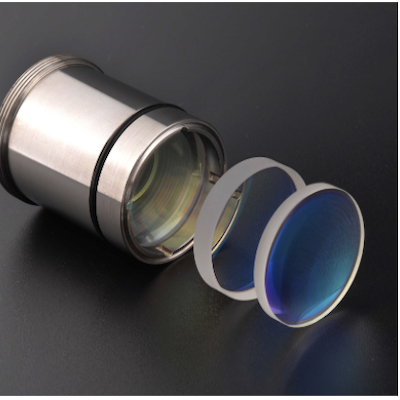
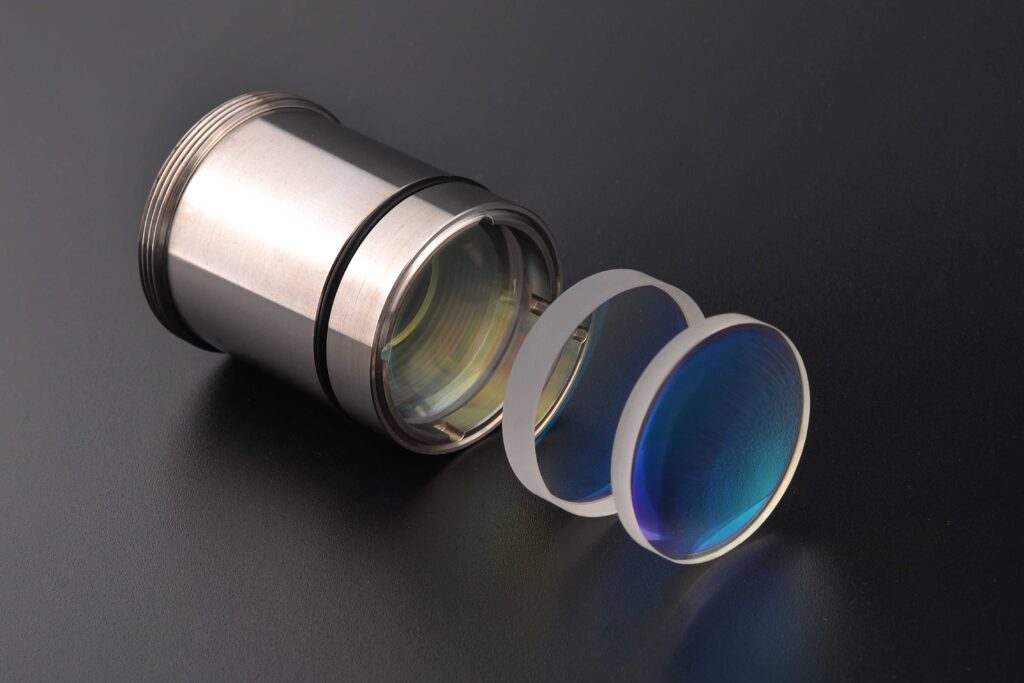
The core function of the collimate lens is to adjust the direction of beam propagation through the principle of refraction. When divergent light sources (such as laser diodes or optical fiber output light) pass through the lens, the curved surface design of the lens will redistribute the propagation path of light, making the light tend to be parallel. This process depends on the focal length and radius of curvature of the lens:
- Focal length selection: The shorter the focal length, the stronger the lens’s ability to compress the divergence angle of the beam, but too short a focal length may cause aberration.
- Material characteristics: Commonly used materials include fused quartz (high temperature resistance, low expansion coefficient) and optical glass (low cost). Infrared materials such as calcium fluoride (CaF2) can be used in special scenarios.
- Coating technology: The permeability film can reduce the loss of surface reflection and improve the light transmittance to more than 99%, and the customized coating can also adapt to the needs of ultraviolet or infrared bands.
II. Typical application fields of slumate lenses
- Laser processing and manufacturing
In laser cutting, welding and 3D printing, climist lenses are used to ensure the high energy density and parallelism of the laser beam and reduce processing errors. For example, the light output by the fiber laser needs to be calibrated by the collimated lens, and then processed with micron-level accuracy through the focusing mirror. - Optical fiber communication system
Optical signals are easy to diverge due to bending or connector problems in optical fiber transmission. The collimated lens can repair the beam quality and improve the stability of long-distance transmission. In addition, it plays a key role in coupling optical paths in optical modules (such as optical trandiers of 5G base stations). - Medical and biological imaging
Endoscopes, confocal microscopes and other equipment rely on the collist lens to control the lighting path to ensure the clarity of imaging. Laser medical equipment (such as ophthalmic surgery) also needs to precisely control the range of action through collimation technology. - Scientific research and testing instruments
In spectrometers, interferometers and other precision instruments, the collimate lens is used to calibrate the light source to avoid scattered light from interfering with the experimental results. In the field of autonomous driving, the LiDAR system achieves high-resolution ranging through collimated laser pulses.
III. Suggestions for the selection and use of callined lenses
- Key parameter matching
- Wavelength range: It needs to be matched with the wavelength of the light source. There are significant differences in the lens design of ultraviolet (200-400nm), visible light (400-700nm) or infrared (over 700nm).
- Light-permitting aperture: The aperture should be larger than the beam diameter to avoid edge light loss.
- Surface accuracy: High-precision applications (such as aerospace optics) require surface roughness <5nm, and ordinary industrial scenarios can be relaxed to λ/4 (λ=633nm).
- Consideration of environmental adaptability
- In high temperature, high humidity or corrosive environment, priority is given to quartz material + waterproof coating.
- Scenes with frequent vibrations need to be equipped with anti-seismic brackets to prevent the lens from shifting.
- Maintenance and calibration
- Regularly use a dust-free cotton swab to dip in ethanol to clean the mirror surface to avoid scratching by hard objects.
- Use an interferometer or parallel optical tube to test the lens performance and adjust the installation angle in time.
IV. Industry development trend and innovation direction
- Supersurface lens technology
Metalens based on nanostructure can replace traditional curved lenses, achieve a lighter and thinner design, and maintain high performance in a wide band. It is expected to be used in AR/VR equipment. - Intelligent integration scheme
Combined with sensors and automatic adjustment algorithms, an adaptive climilation system is developed to compensate for the optical path shift caused by temperature, vibration and other factors in real time to meet the flexible production needs of Industry 4.0. - Cost optimization and domestic substitution
With the breakthrough of domestic optical processing technology, domestic colibrat lenses have approached the international level in terms of coating uniformity, consistency and other indicators. The price is 30%-50% lower than that of imported products, which promotes downstream industries to reduce costs and increase efficiency.
Conclusion
As the “beam commander” of modern optical systems, the technological progress of collimative lenses is constantly expanding its application boundaries. From gigabit optical fiber communication to quantum computing laboratories, from the Face ID module of smartphones to the lidar of deep space detectors, its value is increasingly highlighted in the wave of digitalization and intelligence. In the future, with the integration of new materials and new processes, collus lenses will release their potential in more fields and become the core growth point of the optical industry chain.