
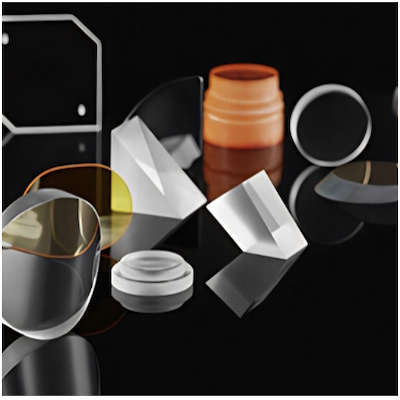
A prism is a transparent object surrounded by two intersecting but not parallel to each other. It is used to divide light or disperse the light beam. Prisms are widely used in optical instruments. Prisms can be divided into several types according to their nature and use. For example, in spectral instruments, the composite light is decomposed into a “dispersive prism” of the spectrum, and the equilateral prism is more commonly used; in instruments such as periscopes and binoculars, the direction of light is changed to adjust its imaging position called “total reflection prism”, and right-angle prism is generally used.
In the figure below, there is an example of a dispersion prism dividing white light into various monochrome light such as red, green and blue.
Edit and search for pictures
Edit and search for pictures
Please click to enter the picture description (up to 18 words)
Reflective prisms are more widely used. Reflective prisms can be seen in cameras, telescopes, microscopes and various medical instruments. According to the different structural forms, reflective prisms are subdivided into many types of prisms.
Let’s have a comprehensive understanding of the types of prism products.
Common optical prisms
- right-angled prismThe cross-seave of the right-angled prism is a right-angled triangle. The optical surface contains two right-angled plane and a bevel. Usually, the beam enters from one right-angled plane. After reflection by the slope, the beam will bend 90 degrees and eject from another right-angled surface, as shown in the figure below.
Edit and search for pictures
Please click to enter the picture description (up to 18 words)
2. Ridge right-angle prism
On the basis of the right-angled prism, the slope of the right-angle prism is divided into two sides and raised upwards to form the shape of the ridge. The two sides are perpendicular to each other, and the ridge right-angle prism is formed. The optical path diagram of the ridge right-angled prism is shown below. The light beam entering the prism will first turn at the ridge, swapping the left and right parts of the image, and then ejecting.
Edit and search for pictures
Please click to enter the picture.
3. Amisi prism
Edit and search for pictures
Please click to enter the picture description (up to 18 words)
In essence, it is a truncated right-angled prism, but a ridge-shaped part is attached to the slope. The most common function of this prism is to cut the image along the midline and swap the left and right parts. The Amisi prism is named after the inventor, Italian astronomer Giovanni Amisi. It is an optical prism with a color dispersion function and is often used in spectrometers.
The Amisi prism is composed of two triprisms. The first triprism is usually made of corona glass with medium dispersion capacity, and the second one is made of high dispersion flant glass. When the light enters the first prism, it is first refracted, then enters the interface between the two prisms, and then ejects in a direction almost perpendicular to the surface of the second prism.
4. Oblique prism (refracting prism)
Edit and search for pictures
Please click to enter the picture description (up to 18 words)
The tangent of the rhombic prism is parallelogram, and its sharp angle is 45 degrees, so it can be regarded as the form of two right-angle prisms glued together. Its effect is to make the incident beam shift a certain distance and then emit. A slope of the rhombus prism can also be made into the form of a ridge.
Five. Rhombus prism in a broad sense
The shape of the rhombic prism in a broad sense is also parallelogram, but its sharp angle is arbitrary. After the light enters the inside of the prism, it will reflect once and then eject, as shown in the figure below: Edit and search for pictures
Please click to enter the picture description (up to 18 words)
When the prism rotates around the incident light, the direction of the emitted image will not rotate with the rotation of the prism. This characteristic makes it suitable for the matching of pupil distance in ophthalmic instruments.
6. Double reflection prism
As a deformation of a generalized rhombus prism, the double reflection prism has two sharp angles of different angles, and the direction of projection is determined by the size of the two sharp angles, as shown in the figure below: Edit and search for pictures
Please click to enter the picture description (up to 18 words)
7. Paul Prism
The Paul prism is usually also an isosceles right triangle prism, but the beam is incident from the slope, and after the reflection of two right-angled surfaces, it is emitted from the slope, so as to change the direction of the image. The Paul prism can also form a roof ridge structure on the right-angled surface, thus forming the roof Paul prism. The diagram of the conventional Paul prism and the roof Paul prism is as follows:
Edit and search for pictures
Please click to enter the picture description (up to 18 words)
8. Doway Prism
Edit and search for pictures
Please click to enter the picture description (up to 18 words)
The Doway prism is a kind of swivel. After the light passes through this prism, the image is inverted 180°. In addition, when the prism rotates with its optical axis, the rotation angle of the image is twice that of the prism. Generally speaking, the Doway prism uses the principle of critical angle to achieve internal full reflection, so its field of view angle is limited. At the same time, it is important to keep the reflective surface clean and use parallel light.
nine. Pentagonal prism
The pentagonal prism is a commonly used prism. One of its angles is a right angle. The light beam is incident from the right-angled plane. After two reflections inside, it is emitted from another right-angled surface. The emitted light and the incident light are 90 degrees. The optical path diagram and physical drawing are shown below.Edit and search for pictures
Please click to enter the picture description (up to 18 words)
Conclusion
In this article, we summarize the types of optical prisms. According to different functions, optical prisms can be divided into two categories: dispersion prisms and reflective prisms. The article introduces 9 common optical monoms, including right-angle prisms, rhombic prisms, Paul prisms and pentagonal prisms, etc. It is worth noting that in this In some monomer prisms, the beam is incident perpendicular to the surface, so the dispersion and aberration caused by the prism itself can be ignored. Through reading this article, you have a clear understanding of the structural forms of these prisms.